Thermal Analysis and Energy Storage Materials
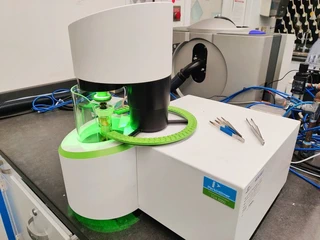
Thermal Analysis Techniques:
DSC, TGA, T-history, Guarded Hot Plate, etc. used to evaluate and optimize phase change materials and thermally functional composites for energy storage and thermal management applications.
Tools and methods
Differential Scanning Calorimetry (DSC) - Performed DSC measurements to determine phase transition temperatures, latent heat, and thermal cycling behavior of phase change materials and composite systems; used to evaluate thermal storage performance and material stability.
Thermogravimetric Analysis (TGA) - Utilized TGA to analyze thermal stability, decomposition behavior, and compositional changes of nanomaterials and composite materials under controlled heating environments.
T-History Method - Applied the T-history technique to evaluate phase change temperature, latent heat, and thermal behavior of PCM formulations under controlled cooling and heating conditions. Used for comparative analysis and validation of thermal energy storage performance in modified versus baseline materials.
Guarded Hot Plate Method - Utilized the guarded hot plate method to measure thermal conductivity of PCM composites and insulating materials under steady-state heat transfer conditions. Applied for assessing the impact of nanomaterial additives and composite formulations on thermal transport properties.
Areas of expertise
- Latent heat analysis
- Melting/freezing behavior
- Thermal cycling stability
- Thermal conductivity enhancement
- PCM formulation design
- Eutectic system design
- Nano-enhanced thermal materials
